An ethnic group is a community of people who share a common cultural background that can include language, religion, traditions, customs, and often shared ancestral origins. Examples of ethnic groups include the Yoruba, who live primarily in southwestern Nigeria, and the Kurds, who reside in parts of Turkey, Iraq, Iran, and Syria.
The AncestryDNA ethnic groups feature provides in-depth information about the people who make up the reference panels of our ancestral regions and includes insights like:
- Names and places of the contemporary communities they identify with
- Languages they speak
- Stories about their traditions, cultures, and ways of life
Exploring AncestryDNA ethnic groups
To share these insights with you, we’ve added an ethnic groups feature to some ancestral regions. If a region has this feature, you’ll see the associated ethnic groups listed on the detailed page about that region.
For example, if you’re exploring the Benin & Togo region, you might see the Gun, Aja, and Tori peoples listed.
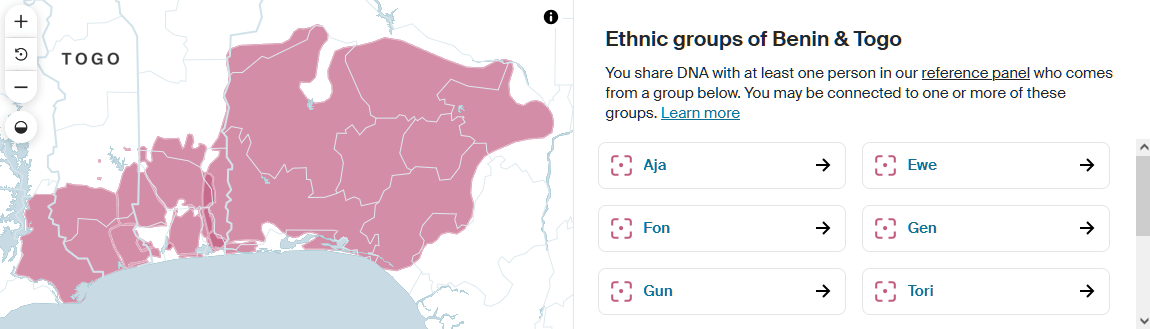
You’re not assigned directly to any ethnic group. Instead, we compare your DNA to the DNA of people with known origins from around the world (called a reference panel) to assign you to an ancestral region (probably more than one). You can then see all the ethnic groups listed by people in our reference panel who also belong to that region. Because your DNA is similar to the people in the reference panel, you might be connected to some of the ethnic groups included in our ancestral region.
How did you find insights for the ethnic groups in AncestryDNA?
We develop our ancestral region reference panel by exploring patterns of genetic relatedness and connectedness among different populations. As we worked to learn more about the people in our reference panel, we noticed other patterns and trends in the information they reported, like the groups they belonged to and the languages they spoke. After analyzing the data and consulting with topic area experts, we summarized our insights into the ethnic groups feature found within some regions of AncestryDNA.
How do I know which ethnic groups I’m connected to?
At this time, we can’t directly connect you to any specific ethnic groups. But our science and methods are always improving. To further your personal journey of discovery, research the ethnic groups linked to the regions you’re assigned, read their stories, and search through related documents and records to learn more.
Frequently asked questions
Select a question below to view the answer. Select the question again to hide it.
Which ancestral regions have ethnic groups?
The following ancestral regions in AncestryDNA currently have the ethnic groups feature:
- Benin & Togo
- Cameroon
- Central Nigeria
- North-Central Nigeria
- Central West Africa
- Mali
- Southern Bantu Peoples
- Eastern Bantu Peoples
- Nilotic Peoples
- Twa
- Yorubaland
- Nigeria
- Nigerian Woodlands
We may add the ethnic groups feature to more ancestral regions as we get more data, so check back later if you don’t see any in your regions yet.
Family says we’re connected to a certain ethnic group; why isn’t it in my results?
The ethnic groups shown as part of some ancestral regions are based on patterns we’ve noticed in the identities of our reference panel members. Because they represent the people in our reference panel, it doesn’t include all ethnic groups who’ve lived or are living there today. Some groups may not be represented in our reference panel. If you’re connected to an ethnic group not represented in our reference panel, your DNA results may show nearby ancestral regions with genetically related ethnic groups. As we continue to grow and update our reference panels, we may add more ethnic groups, which might then be reflected in your results.